is the single biggest lever you have over quote accuracy — vague specs get vague (and usually inflated) prices. ### Why these are FOB prices, not landed cost FOB means **Free On Board**. The price covers everything up to the moment your goods are loaded onto the vessel at the port of Chittagong: fabric, cutting, sewing, trims, finishing, packing and inland transport to port. It does **not** include ocean freight, marine insurance, import duty or VAT in your destination country. When a factory or agent quotes you "$3.20," they almost always mean $3.20 FOB. The delivered-to-your-door number is higher, and we break that out in full further down. ## How a Bangladesh FOB price is actually built Behind every FOB figure is a cost sheet. When we cost a style for a client, we build it from the bottom up so nothing is hidden. Understanding this anatomy lets you challenge a quote intelligently instead of just asking for "a better price." ### Fabric and the Bill of Materials (BOM) Fabric is the largest single cost in almost every garment — commonly 55–70% of the FOB price. It is calculated from your **fabric consumption** (how many kilograms of knit or metres of woven cloth the garment needs) multiplied by the fabric price per kg or per metre, plus a wastage allowance of roughly 8–15%. This is where Bangladesh's structural advantage lives. Large vertically integrated groups spin yarn, knit or weave the fabric, dye it and cut-and-sew it on a single campus. That removes handoffs that add both cost and 25–40 days of lead time elsewhere. It is also why cotton-based knitwear is Bangladesh's sweet spot, and why complex synthetics or structured tailoring are often better sourced elsewhere — a point we cover in [Bangladesh vs China vs Turkey](https://www.milkyfashions.com/bangladesh-vs-china-vs-turkey-garment-sourcing/). ### CMT — cut, make, trim (the labour line) CMT is the conversion cost of turning fabric into a finished garment: cutting, sewing, and finishing labour. It is driven by the **SMV** (Standard Minute Value) — the number of machine minutes a garment takes to sew — multiplied by the factory's cost per minute. Bangladesh's cost edge here is real but frequently misunderstood. The RMG sector minimum wage is roughly 12,500 BDT (about $114) per month, materially below Vietnam and India for equivalent skill bands. That keeps CMT low on simple, high-repetition styles. The moment a style adds operations — pin tucks, complex panels, multiple washes — SMV climbs and the labour advantage narrows. Simple, cotton, high-volume is where Bangladesh wins on CMT. ### Trims, accessories and packaging Every non-fabric component sits here: sewing thread, labels, hangtags, care labels, zippers, buttons, drawcords, elastic, poly bags and cartons. Individually small, collectively meaningful — often 8–15% of FOB. This line also hides a classic trap. If your BOM just says "zipper," the factory quotes the cheapest nylon zipper to keep the number attractive. Specify "YKK metal zipper" later and the price jumps. Branded trims (YKK, specific care-label stock, custom woven labels) belong in the BOM from day one. ### Testing, compliance and overhead Serious buyers require third-party testing (fibre composition, colour fastness, dimensional stability, and chemical safety under [REACH and OEKO-TEX](https://www.milkyfashions.com/reach-oeko-tex-compliance-apparel/)). Add factory overhead — utilities, machinery depreciation, floor management, and the cost of maintaining audits like [BSCI, WRAP, SEDEX and amfori](https://www.milkyfashions.com/bsci-vs-wrap-vs-sedex-amfori-2026/). A compliant, well-run factory carries more overhead than a non-compliant one, which is precisely why the cheapest quote is often the riskiest. Compliance is not a tax on your price; it is what protects your brand from a supply-chain scandal. ### Factory margin, buying-house commission and the final FOB On top of direct cost, the factory adds its profit margin — for most Bangladesh RMG products this is a thin single-digit to low-double-digit percentage. A buying house or [apparel sourcing agent](https://www.milkyfashions.com/apparel-sourcing-agent-bangladesh/) then adds a commission (commonly 5–10%) for finding and vetting the factory, running development, controlling quality and managing shipment. That commission is where buyers get nervous — and where they misunderstand the maths. A good buying house typically negotiates a better FOB, catches defects before they ship, and prevents the costly failures documented in [why small fashion brands fail at Bangladesh sourcing](https://www.milkyfashions.com/why-small-fashion-brands-fail-bangladesh-sourcing/). The commission is usually smaller than the losses it prevents. If you are still deciding whether you need one, [what is a garment buying house](https://www.milkyfashions.com/what-is-a-garment-buying-house/) explains the model in full. ## The five factors that move your unit price the most If you want a lower FOB, these are the five dials to turn — in order of impact. ### 1. Order volume and MOQ Volume is the most powerful lever. Setting up a sewing line — calibrating machines, allocating operators, running test batches — takes fixed time. Spread that setup across 500 pieces and it dominates the cost; spread it across 20,000 and it nearly disappears. FOB can fall 30–50% between a startup run and a bulk order. The realistic MOQ floor at compliant export factories is around 1,000 pieces per style, per colour. Anyone marketing 200-piece "factory" runs is usually a trader. Our full breakdown of the numbers lives in the [MOQ guide for fashion startups](https://www.milkyfashions.com/moq-guide-bangladesh-garment-sourcing/). ### 2. Fabric choice and GSM Because fabric is the biggest cost, fabric decisions move the price most. Heavier GSM means more grams per garment and a higher price. Combed cotton costs more than carded. Melange and specialty yarns cost more than solids. Choosing 180 gsm instead of 220 gsm for a tee, where the hand still suits your brand, is a legitimate way to protect margin without cutting quality. ### 3. Construction and embellishment complexity Every extra operation adds SMV and cost. Prints, embroidery, appliqué, garment dye, enzyme or stone washes, contrast panels, and special seams all push the number up. A flat screen print is cheap; multi-colour placement prints, all-over prints and embroidery are not. Denim washes in particular can add several dollars per piece. Design for manufacture: keep embellishment intentional, not accidental. ### 4. Certifications and sustainable fibres GOTS-certified organic cotton or GRS-recycled polyester typically raises FOB by 15–20% versus conventional fibres, because certified inputs cost more and the certified supply chain carries audit overhead. For many European brands this is non-negotiable and worth every cent — see [GOTS-certified factories with low MOQ in Bangladesh](https://www.milkyfashions.com/gots-certified-low-moq-bangladesh/) and our [sustainable garment sourcing](https://www.milkyfashions.com/sustainable-garment-sourcing-bangladesh/) approach. Budget for it deliberately rather than being surprised by it. ### 5. Season, capacity and cotton prices FOB is not static across the year. Global cotton and yarn indices move with harvests and energy prices. Factory capacity tightens ahead of peak Western retail seasons, and a quote booked into a full factory in July is weaker than the same quote in a quieter month. Booking capacity early — and understanding [Bangladesh garment lead times](https://www.milkyfashions.com/bangladesh-garment-lead-time/) — is itself a cost-control tactic. ## From FOB to landed cost: France, Germany, Spain and the UK This is the section most cost articles skip, and it is the one that decides your actual margin. Your landed cost is FOB **plus** freight and insurance, **plus** import duty, **plus** VAT recovery timing. Here is how it works for the four markets we are focusing on. ### Freight and insurance (CIF) Ocean freight from Chittagong to Northern European ports (Rotterdam, Hamburg, Le Havre) or UK ports (Felixstowe, Southampton) is charged per container or as LCL for smaller loads. On a full container of lightweight knitwear, sea freight and insurance typically add only $0.15–$0.40 per garment. On small LCL shipments the per-unit cost is higher. Air freight is dramatically more — often $1.70–$3.50 per piece — and should be reserved for genuine emergencies, not routine replenishment. Once freight and insurance are added to FOB, you have your **CIF** value, which is the base the customs authority uses to calculate duty. ### Import duty today: France, Germany, Spain and the UK Here is the good news for 2026, and Bangladesh's biggest commercial advantage in Europe: - **France, Germany and Spain (EU):** Bangladeshi garments currently enter the EU **duty-free and quota-free** under the Everything But Arms (EBA) scheme. On a €100,000 knitwear shipment, EBA saves roughly €9,600 in duty versus a non-preferential origin. That zero-duty status is a core reason one in three garments sold in Europe is made in Bangladesh. - **United Kingdom:** Post-Brexit, the UK grants Bangladesh **duty-free access** under the Developing Countries Trading Scheme (DCTS), which replaced the UK's GSP in 2023. UK-bound apparel from Bangladesh also currently enters at zero duty. So today, whether you sell in Lyon, Munich, Madrid or Manchester, your Bangladesh-origin apparel carries **no import duty**. That is a structural margin advantage that sourcing from many other countries simply cannot match. Our market-specific pages go deeper for [French brands](https://www.milkyfashions.com/apparel-sourcing-bangladesh-france/), [German brands](https://www.milkyfashions.com/apparel-sourcing-bangladesh-germany/), [Spanish brands](https://www.milkyfashions.com/apparel-sourcing-bangladesh-spain/) and [UK brands](https://www.milkyfashions.com/apparel-sourcing-bangladesh-uk-brands/). ### What changes after LDC graduation in November 2026 Bangladesh is scheduled to graduate from Least Developed Country status on 24 November 2026, and this affects your duty line — but not immediately. The EU and the UK have both agreed a three-year transition, so EBA and DCTS duty-free access continue until around November 2029. The two markets then diverge. For the UK, Bangladesh is expected to keep duty-free apparel access under DCTS Enhanced Preferences even beyond 2029, though with stricter rules of origin. For the EU (France, Germany, Spain), duty-free status is expected to end after the transition, with standard GSP duties of roughly 9.6–12% applying unless Bangladesh secures GSP+ or a bilateral deal. If you build multi-year sourcing plans, model a 0% duty scenario through 2029 and a cautious EU duty scenario from 2029 onward. We keep this fully updated in the [Bangladesh LDC graduation 2026 survival guide](https://www.milkyfashions.com/bangladesh-ldc-graduation-2026/) — essential reading before you sign any long-term contract. ### VAT and the final shelf-price maths Import VAT applies on entry (20% in France and the UK, 19% in Germany, 21% in Spain), but for a VAT-registered business this is recoverable and should be treated as cash-flow timing, not a true cost. Here is a simplified worked landed cost for a combed-cotton tee sold into Germany today: - FOB Chittagong: **$4.80** - Sea freight + insurance: **+$0.25** → CIF $5.05 - EU import duty (EBA, duty-free): **+$0.00** - **Landed cost (ex-VAT): ~$5.05 per piece** That same tee sourced from a non-preferential origin at the same FOB would carry roughly $0.60 in duty on top — the difference between a healthy margin and a squeezed one, multiplied across every unit, every season. ## How to read and pressure-test a Bangladesh quote A number on its own tells you nothing. Here is how to judge whether a quote is real. ### The red flags of a "too cheap" FOB price A $1.80 cotton-tee quote at 1,000 units is not a bargain — it is a warning. Either the factory is cutting corners on fabric weight, labour or compliance, or the quote will quietly revise upward after you have committed. Sustainable, ethical, tested production has a floor, and quotes that sit below it are telling you something about what has been left out. ### Open costing vs closed costing In **closed costing**, the supplier gives you one FOB number and nothing else. In **open costing**, you see the full cost sheet — fabric consumption, fabric price, CMT, trims, testing, overhead and margin, line by line. Open costing is the mark of a trustworthy partner. It lets you challenge the fabric price, question the wastage percentage, or swap a trim — and it makes negotiation collaborative rather than adversarial. We work in open costing by default. ### Questions to ask before you approve a quote Ask what fabric GSM and composition the price assumes; what wastage percentage is built in; whether the quote is FOB or CIF; which trims and labels are branded versus generic; what testing is included; and what the price would be at the next volume tier up. If a supplier resists these questions, treat the resistance as data. For a complete framework, use our [27-point checklist for vetting a Bangladesh buying house](https://www.milkyfashions.com/how-to-vet-bangladesh-buying-house/) and the newer [supplier vetting decision guide](https://www.milkyfashions.com/how-to-vet-bangladesh-apparel-supplier-2026/). ## How Milky Fashions keeps your costing transparent Milky Fashions is a BGBA-registered garment buying house that has costed and shipped apparel for European brands since 2002. We build every style in open costing, negotiate FOB line by line against a network of compliant, audited factories, and manage the whole path from [first order](https://www.milkyfashions.com/how-to-order-garments-bangladesh/) to delivered goods across [T-shirts](https://www.milkyfashions.com/t-shirt-supplier-bangladesh/), [polo shirts](https://www.milkyfashions.com/polo-shirt-manufacturer-bangladesh/), [sweatshirts](https://www.milkyfashions.com/sweatshirt-manufacturer-bangladesh/), [hoodies](https://www.milkyfashions.com/hoodie-manufacturer-bangladesh/), [knitwear](https://www.milkyfashions.com/knitwear-sourcing-bangladesh/), [sweaters and cardigans](https://www.milkyfashions.com/sweater-cardigan-manufacturer-bangladesh/) and [denim](https://www.milkyfashions.com/denim-supplier-bangladesh/). If you want a real cost sheet for your style rather than a range, [send us your tech pack](https://www.milkyfashions.com/contact/) and we will build one. ## Frequently asked questions ### How much does it cost to manufacture a T-shirt in Bangladesh? A basic cotton T-shirt costs roughly $2.50–$3.50 per piece FOB at bulk volumes, rising to $4.00–$5.50 for premium combed cotton and $6.50–$9.00 for GOTS-certified organic cotton. The exact figure depends on fabric GSM, print or embroidery, branded trims and order quantity. FOB excludes freight and duty. ### What does FOB price mean in garment sourcing? FOB (Free On Board) is the price of your goods loaded onto the vessel at the export port — here, Chittagong. It includes fabric, cutting, sewing, trims, finishing, packing and inland transport to port, but excludes ocean freight, insurance, import duty and VAT in your country. Your landed cost is always higher than FOB. ### Is it cheaper to manufacture in Bangladesh than in China or Turkey? For cotton-based knitwear at volume, Bangladesh is usually the lowest landed cost into Europe, thanks to low labour cost, vertical integration and current duty-free access. For structured tailoring, technical synthetics or very small runs, Turkey, Portugal or China can be more competitive. The right answer depends on product type, volume and destination. ### What is the minimum order needed to get good FOB pricing? Competitive FOB pricing generally starts around 1,000 pieces per style, per colour, at compliant export factories, with the best rates above 3,000–5,000 pieces. Below roughly 500 pieces, per-unit cost rises sharply because factory setup time is spread across fewer garments. ### Will Bangladeshi clothing get more expensive for EU buyers after 2026? Not immediately. Bangladesh graduates from LDC status on 24 November 2026, but the EU has agreed a three-year transition, so duty-free EBA access continues until around November 2029. After that, EU duties of roughly 9.6–12% may apply unless Bangladesh secures GSP+. The UK is expected to keep duty-free access under DCTS beyond 2029. ### How much is import duty on Bangladeshi clothing in France, Germany and Spain? Currently zero. Bangladeshi garments enter France, Germany and Spain — and the rest of the EU — duty-free and quota-free under the Everything But Arms scheme. Import VAT still applies on entry (19–21%) but is recoverable for VAT-registered businesses. ### Does the FOB price include shipping to Europe? No. FOB covers costs only up to loading at Chittagong port. Ocean freight and insurance (which convert FOB into CIF) are added separately and typically cost $0.15–$0.40 per garment on a full container of knitwear, far less than air freight.](https://www.milkyfashions.com/wp-content/uploads/2026/07/bangladesh-garment-manufacturing-cost-fob-2026.webp "Bangladesh Garment Manufacturing Cost | Milky Fashions")
Bangladesh Garment Manufacturing Cost: The 2026 FOB and Landed-Cost Guide for European Brands
In 2026, the cost to manufacture clothing in Bangladesh typically runs from around $2.50 to $9.00 per piece FOB, depending on the product, fabric and order size. A basic cotton T-shirt sits near $2.50–$3.50, a premium combed-cotton polo around $4.50–$7.00, and a fleece hoodie roughly $6.00–$10.00. But that FOB figure is only the starting line. What actually lands in your warehouse in Paris, Berlin, Madrid or London is a different number once freight, duty and VAT are added.
Most “cost to manufacture in Bangladesh” articles are written by factories quoting their own capacity. This guide is written from the other side of the table — the buying house that builds these cost sheets, negotiates them line by line, and ships against them every week. Below is exactly how a Bangladesh FOB price is constructed, what moves it up or down, and how it converts to a true landed cost for brands in France, Germany, Spain and the UK.
What does it cost to manufacture clothing in Bangladesh in 2026?
Here are indicative 2026 FOB Chittagong price ranges by product category, based on real quotes for mid-volume orders (roughly 1,000–5,000 pieces per style, per colour). Treat these as planning benchmarks, not fixed quotes — your exact number depends on your tech pack.
| Product | Typical fabric | Indicative FOB (per piece, USD) |
|---|---|---|
| Basic cotton T-shirt | 150–180 gsm single jersey | $2.50 – $3.50 |
| Premium / combed-cotton tee | 180–220 gsm | $4.00 – $5.50 |
| Piqué polo shirt | 200–240 gsm | $4.50 – $7.00 |
| Sweatshirt | 300–320 gsm fleece | $5.00 – $8.00 |
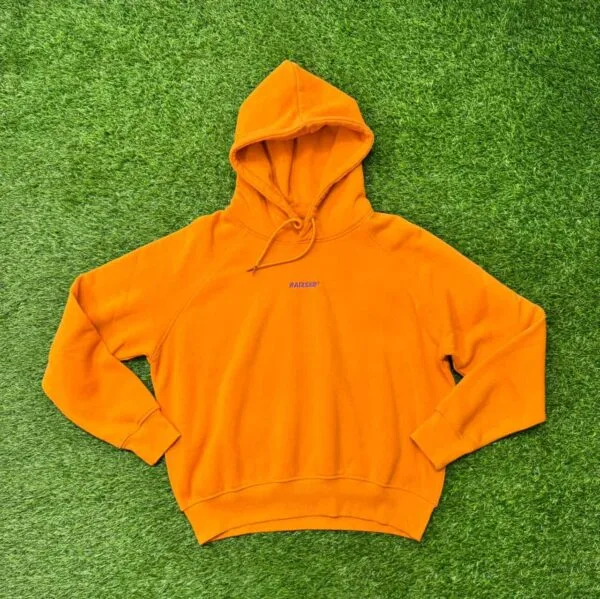
| Hoodie (zip or pullover) | 320–350 gsm fleece | $6.00 – $10.00 |
| Knit sweater / cardigan | 3–12 gauge yarn | $6.00 – $14.00 |
| Basic 5-pocket denim | 10–12 oz denim | $6.50 – $12.00 |
| GOTS organic-cotton tee | certified jersey | $6.50 – $9.00 |
Two products with the same name can be quoted 40% apart. A “T-shirt” in carded cotton with a printed woven label is a different animal from a combed-cotton tee with an embroidered chest logo, side seams and a branded neck tape. This is why a precise tech pack for garment manufacturing is the single biggest lever you have over quote accuracy — vague specs get vague (and usually inflated) prices.
Why these are FOB prices, not landed cost
FOB means Free On Board. The price covers everything up to the moment your goods are loaded onto the vessel at the port of Chittagong: fabric, cutting, sewing, trims, finishing, packing and inland transport to port. It does not include ocean freight, marine insurance, import duty or VAT in your destination country. When a factory or agent quotes you “$3.20,” they almost always mean $3.20 FOB. The delivered-to-your-door number is higher, and we break that out in full further down.
How a Bangladesh FOB price is actually built
Behind every FOB figure is a cost sheet. When we cost a style for a client, we build it from the bottom up so nothing is hidden. Understanding this anatomy lets you challenge a quote intelligently instead of just asking for “a better price.”
Fabric and the Bill of Materials (BOM)
Fabric is the largest single cost in almost every garment — commonly 55–70% of the FOB price. It is calculated from your fabric consumption (how many kilograms of knit or metres of woven cloth the garment needs) multiplied by the fabric price per kg or per metre, plus a wastage allowance of roughly 8–15%.
This is where Bangladesh’s structural advantage lives. Large vertically integrated groups spin yarn, knit or weave the fabric, dye it and cut-and-sew it on a single campus. That removes handoffs that add both cost and 25–40 days of lead time elsewhere. It is also why cotton-based knitwear is Bangladesh’s sweet spot, and why complex synthetics or structured tailoring are often better sourced elsewhere — a point we cover in Bangladesh vs China vs Turkey.
CMT — cut, make, trim (the labour line)
CMT is the conversion cost of turning fabric into a finished garment: cutting, sewing, and finishing labour. It is driven by the SMV (Standard Minute Value) — the number of machine minutes a garment takes to sew — multiplied by the factory’s cost per minute.
Bangladesh’s cost edge here is real but frequently misunderstood. The RMG sector minimum wage is roughly 12,500 BDT (about $114) per month, materially below Vietnam and India for equivalent skill bands. That keeps CMT low on simple, high-repetition styles. The moment a style adds operations — pin tucks, complex panels, multiple washes — SMV climbs and the labour advantage narrows. Simple, cotton, high-volume is where Bangladesh wins on CMT.
Trims, accessories and packaging
Every non-fabric component sits here: sewing thread, labels, hangtags, care labels, zippers, buttons, drawcords, elastic, poly bags and cartons. Individually small, collectively meaningful — often 8–15% of FOB. This line also hides a classic trap. If your BOM just says “zipper,” the factory quotes the cheapest nylon zipper to keep the number attractive. Specify “YKK metal zipper” later and the price jumps. Branded trims (YKK, specific care-label stock, custom woven labels) belong in the BOM from day one.
Testing, compliance and overhead
Serious buyers require third-party testing (fibre composition, colour fastness, dimensional stability, and chemical safety under REACH and OEKO-TEX). Add factory overhead — utilities, machinery depreciation, floor management, and the cost of maintaining audits like BSCI, WRAP, SEDEX and amfori. A compliant, well-run factory carries more overhead than a non-compliant one, which is precisely why the cheapest quote is often the riskiest. Compliance is not a tax on your price; it is what protects your brand from a supply-chain scandal.
Factory margin, buying-house commission and the final FOB
On top of direct cost, the factory adds its profit margin — for most Bangladesh RMG products this is a thin single-digit to low-double-digit percentage. A buying house or apparel sourcing agent then adds a commission (commonly 5–10%) for finding and vetting the factory, running development, controlling quality and managing shipment.
That commission is where buyers get nervous — and where they misunderstand the maths. A good buying house typically negotiates a better FOB, catches defects before they ship, and prevents the costly failures documented in why small fashion brands fail at Bangladesh sourcing. The commission is usually smaller than the losses it prevents. If you are still deciding whether you need one, what is a garment buying house explains the model in full.
The five factors that move your unit price the most
If you want a lower FOB, these are the five dials to turn — in order of impact.
1. Order volume and MOQ
Volume is the most powerful lever. Setting up a sewing line — calibrating machines, allocating operators, running test batches — takes fixed time. Spread that setup across 500 pieces and it dominates the cost; spread it across 20,000 and it nearly disappears. FOB can fall 30–50% between a startup run and a bulk order. The realistic MOQ floor at compliant export factories is around 1,000 pieces per style, per colour. Anyone marketing 200-piece “factory” runs is usually a trader. Our full breakdown of the numbers lives in the MOQ guide for fashion startups.
2. Fabric choice and GSM
Because fabric is the biggest cost, fabric decisions move the price most. Heavier GSM means more grams per garment and a higher price. Combed cotton costs more than carded. Melange and specialty yarns cost more than solids. Choosing 180 gsm instead of 220 gsm for a tee, where the hand still suits your brand, is a legitimate way to protect margin without cutting quality.
3. Construction and embellishment complexity
Every extra operation adds SMV and cost. Prints, embroidery, appliqué, garment dye, enzyme or stone washes, contrast panels, and special seams all push the number up. A flat screen print is cheap; multi-colour placement prints, all-over prints and embroidery are not. Denim washes in particular can add several dollars per piece. Design for manufacture: keep embellishment intentional, not accidental.
4. Certifications and sustainable fibres
GOTS-certified organic cotton or GRS-recycled polyester typically raises FOB by 15–20% versus conventional fibres, because certified inputs cost more and the certified supply chain carries audit overhead. For many European brands this is non-negotiable and worth every cent — see GOTS-certified factories with low MOQ in Bangladesh and our sustainable garment sourcing approach. Budget for it deliberately rather than being surprised by it.
5. Season, capacity and cotton prices
FOB is not static across the year. Global cotton and yarn indices move with harvests and energy prices. Factory capacity tightens ahead of peak Western retail seasons, and a quote booked into a full factory in July is weaker than the same quote in a quieter month. Booking capacity early — and understanding Bangladesh garment lead times — is itself a cost-control tactic.
From FOB to landed cost: France, Germany, Spain and the UK
This is the section most cost articles skip, and it is the one that decides your actual margin. Your landed cost is FOB plus freight and insurance, plus import duty, plus VAT recovery timing. Here is how it works for the four markets we are focusing on.
Freight and insurance (CIF)
Ocean freight from Chittagong to Northern European ports (Rotterdam, Hamburg, Le Havre) or UK ports (Felixstowe, Southampton) is charged per container or as LCL for smaller loads. On a full container of lightweight knitwear, sea freight and insurance typically add only $0.15–$0.40 per garment. On small LCL shipments the per-unit cost is higher. Air freight is dramatically more — often $1.70–$3.50 per piece — and should be reserved for genuine emergencies, not routine replenishment. Once freight and insurance are added to FOB, you have your CIF value, which is the base the customs authority uses to calculate duty.
Import duty today: France, Germany, Spain and the UK
Here is the good news for 2026, and Bangladesh’s biggest commercial advantage in Europe:
- France, Germany and Spain (EU): Bangladeshi garments currently enter the EU duty-free and quota-free under the Everything But Arms (EBA) scheme. On a €100,000 knitwear shipment, EBA saves roughly €9,600 in duty versus a non-preferential origin. That zero-duty status is a core reason one in three garments sold in Europe is made in Bangladesh.
- United Kingdom: Post-Brexit, the UK grants Bangladesh duty-free access under the Developing Countries Trading Scheme (DCTS), which replaced the UK’s GSP in 2023. UK-bound apparel from Bangladesh also currently enters at zero duty.
So today, whether you sell in Lyon, Munich, Madrid or Manchester, your Bangladesh-origin apparel carries no import duty. That is a structural margin advantage that sourcing from many other countries simply cannot match. Our market-specific pages go deeper for French brands, German brands, Spanish brands and UK brands.
What changes after LDC graduation in November 2026
Bangladesh is scheduled to graduate from Least Developed Country status on 24 November 2026, and this affects your duty line — but not immediately. The EU and the UK have both agreed a three-year transition, so EBA and DCTS duty-free access continue until around November 2029.
The two markets then diverge. For the UK, Bangladesh is expected to keep duty-free apparel access under DCTS Enhanced Preferences even beyond 2029, though with stricter rules of origin. For the EU (France, Germany, Spain), duty-free status is expected to end after the transition, with standard GSP duties of roughly 9.6–12% applying unless Bangladesh secures GSP+ or a bilateral deal. If you build multi-year sourcing plans, model a 0% duty scenario through 2029 and a cautious EU duty scenario from 2029 onward. We keep this fully updated in the Bangladesh LDC graduation 2026 survival guide — essential reading before you sign any long-term contract.
VAT and the final shelf-price maths
Import VAT applies on entry (20% in France and the UK, 19% in Germany, 21% in Spain), but for a VAT-registered business this is recoverable and should be treated as cash-flow timing, not a true cost. Here is a simplified worked landed cost for a combed-cotton tee sold into Germany today:
- FOB Chittagong: $4.80
- Sea freight + insurance: +$0.25 → CIF $5.05
- EU import duty (EBA, duty-free): +$0.00
- Landed cost (ex-VAT): ~$5.05 per piece
That same tee sourced from a non-preferential origin at the same FOB would carry roughly $0.60 in duty on top — the difference between a healthy margin and a squeezed one, multiplied across every unit, every season.
How to read and pressure-test a Bangladesh quote
A number on its own tells you nothing. Here is how to judge whether a quote is real.
The red flags of a “too cheap” FOB price
A $1.80 cotton-tee quote at 1,000 units is not a bargain — it is a warning. Either the factory is cutting corners on fabric weight, labour or compliance, or the quote will quietly revise upward after you have committed. Sustainable, ethical, tested production has a floor, and quotes that sit below it are telling you something about what has been left out.
Open costing vs closed costing
In closed costing, the supplier gives you one FOB number and nothing else. In open costing, you see the full cost sheet — fabric consumption, fabric price, CMT, trims, testing, overhead and margin, line by line. Open costing is the mark of a trustworthy partner. It lets you challenge the fabric price, question the wastage percentage, or swap a trim — and it makes negotiation collaborative rather than adversarial. We work in open costing by default.
Questions to ask before you approve a quote
Ask what fabric GSM and composition the price assumes; what wastage percentage is built in; whether the quote is FOB or CIF; which trims and labels are branded versus generic; what testing is included; and what the price would be at the next volume tier up. If a supplier resists these questions, treat the resistance as data. For a complete framework, use our 27-point checklist for vetting a Bangladesh buying house and the newer supplier vetting decision guide.
How Milky Fashions keeps your costing transparent
Milky Fashions is a BGBA-registered garment buying house that has costed and shipped apparel for European brands since 2002. We build every style in open costing, negotiate FOB line by line against a network of compliant, audited factories, and manage the whole path from first order to delivered goods across T-shirts, polo shirts, sweatshirts, hoodies, knitwear, sweaters and cardigans and denim. If you want a real cost sheet for your style rather than a range, send us your tech pack and we will build one.
Frequently asked questions
How much does it cost to manufacture a T-shirt in Bangladesh?
A basic cotton T-shirt costs roughly $2.50–$3.50 per piece FOB at bulk volumes, rising to $4.00–$5.50 for premium combed cotton and $6.50–$9.00 for GOTS-certified organic cotton. The exact figure depends on fabric GSM, print or embroidery, branded trims and order quantity. FOB excludes freight and duty.
What does FOB price mean in garment sourcing?
FOB (Free On Board) is the price of your goods loaded onto the vessel at the export port — here, Chittagong. It includes fabric, cutting, sewing, trims, finishing, packing and inland transport to port, but excludes ocean freight, insurance, import duty and VAT in your country. Your landed cost is always higher than FOB.
Is it cheaper to manufacture in Bangladesh than in China or Turkey?
For cotton-based knitwear at volume, Bangladesh is usually the lowest landed cost into Europe, thanks to low labour cost, vertical integration and current duty-free access. For structured tailoring, technical synthetics or very small runs, Turkey, Portugal or China can be more competitive. The right answer depends on product type, volume and destination.
What is the minimum order needed to get good FOB pricing?
Competitive FOB pricing generally starts around 1,000 pieces per style, per colour, at compliant export factories, with the best rates above 3,000–5,000 pieces. Below roughly 500 pieces, per-unit cost rises sharply because factory setup time is spread across fewer garments.
Will Bangladeshi clothing get more expensive for EU buyers after 2026?
Not immediately. Bangladesh graduates from LDC status on 24 November 2026, but the EU has agreed a three-year transition, so duty-free EBA access continues until around November 2029. After that, EU duties of roughly 9.6–12% may apply unless Bangladesh secures GSP+. The UK is expected to keep duty-free access under DCTS beyond 2029.
How much is import duty on Bangladeshi clothing in France, Germany and Spain?
Currently zero. Bangladeshi garments enter France, Germany and Spain — and the rest of the EU — duty-free and quota-free under the Everything But Arms scheme. Import VAT still applies on entry (19–21%) but is recoverable for VAT-registered businesses.
Does the FOB price include shipping to Europe?
No. FOB covers costs only up to loading at Chittagong port. Ocean freight and insurance (which convert FOB into CIF) are added separately and typically cost $0.15–$0.40 per garment on a full container of knitwear, far less than air freight.

Director and Head of Merchandising at Milky Fashions, a BGBA-registered garment buying house in Bangladesh since 2002. Specialises in knitwear sourcing, factory compliance, and European buyer relations.