GOTS Certified Factories with Low MOQ in Bangladesh — Complete Guide for European Brands
You are sourcing organic apparel for the European market. You need GOTS certification — your retail partners require it, your end consumers expect it, and your compliance team has made it non-negotiable. But every GOTS-certified factory you approach in Bangladesh comes back with minimum orders your volume cannot support.
This is one of the most consistent frustrations European fashion brands face when building a GOTS-certified supply chain in Bangladesh. The certification exists. The manufacturing capability exists. The gap is MOQ — and understanding how to close that gap is exactly what this guide covers.
Milky Fashions has been connecting European brands with GOTS certified clothing manufacturer partners in Bangladesh since 2002, placing orders with certified organic cotton clothing manufacturer facilities across the country. This guide gives you the complete picture: what GOTS certification means in a Bangladesh sourcing context, why MOQs for certified organic production are higher than conventional, what realistic minimums look like by product category, and how a buying house model gives smaller European brands access to GOTS-certified production at quantities that factory-direct sourcing cannot accommodate.
What GOTS Certification Actually Means — and Why It Matters for Your Supply Chain
The Global Organic Textile Standard (GOTS) is the world’s leading processing standard for organic textiles. For a garment to carry a GOTS label, the entire supply chain — from the raw fibre through spinning, knitting or weaving, dyeing, finishing, and final garment production — must meet GOTS requirements at every stage.
This is a critical point that many European buyers underestimate when they first approach Bangladesh sourcing. GOTS is not a factory certification in isolation. It is a chain-of-custody standard. Every link in the chain must be certified — the fabric mill, the dye house, the finishing facility, and the garment factory. If any single link breaks, the GOTS claim is invalid regardless of what the final factory holds.
What GOTS specifically requires at the garment manufacturing stage:
- Use of certified organic fibres throughout production — no blending with conventional cotton without disclosure
- Prohibition of toxic dyes, heavy metals, formaldehyde, and genetically modified organisms at every processing stage
- Wastewater treatment systems meeting GOTS environmental criteria
- Social criteria aligned with ILO conventions — no child labour, living wages, safe working conditions
- Annual third-party certification audits by a GOTS-approved certification body
- Documented transaction certificates for every order shipped under GOTS
For European brands selling into markets where organic claims are regulated — Germany, France, the UK, the Netherlands — GOTS certification is the standard that substantiates your organic marketing claims. Greenwashing legislation across the EU is tightening significantly. A GOTS transaction certificate is the document that protects your brand from regulatory and consumer challenge.
Why MOQs Are Higher for GOTS-Certified Production in Bangladesh
Before addressing how to achieve low MOQs, it is worth understanding why GOTS-certified production carries higher minimums than conventional production — so you can have realistic conversations with factories and buying houses, and structure your programmes accordingly.
Organic fabric mill minimums drive the floor. Certified organic cotton yarn and fabric is produced in smaller runs than conventional material. Fabric mills spinning and weaving organic cotton set their own minimum yardage requirements — typically 500 to 1,000 kg per colour per fabric construction. This fabric minimum then sets the realistic floor for garment production quantities, because no factory will cut into a fabric run that is significantly below mill minimums.
Dedicated production lines and cleaning protocols. GOTS-certified factories cannot run organic and conventional production on the same line without documented cleaning procedures between runs. Smaller organic orders disrupt production scheduling more significantly, and factories price or minimum-order this disruption accordingly.
Certification and documentation overhead. Every GOTS order requires transaction certificates issued by the certification body. The administrative overhead per order is fixed regardless of quantity — which means small orders carry disproportionately high certification costs per unit.
Limited certified factory pool. Bangladesh has a smaller number of GOTS-certified garment factories relative to its conventional manufacturing base. Less competition means less pressure to accommodate very small orders.
Understanding these structural reasons matters because it shapes how you approach your programme. A 200-piece minimum for a GOTS-certified hoodie is genuinely achievable through a buying house with consolidated order volume. A 50-piece minimum is not realistic in Bangladesh regardless of how you approach it.
Realistic MOQs for GOTS-Certified Production in Bangladesh — By Category
These are real numbers based on current market conditions for GOTS-certified production through Milky Fashions’ factory network. Factory-direct minimums are typically two to five times higher.
| Product Category | Via Buying House (MOQ) | Factory Direct (Typical MOQ) | Lead Time |
|---|---|---|---|
| Basic T-Shirts (Organic Cotton Jersey) | From 200 pcs/colour/style | 1,000–3,000 pcs | 50–65 days |
| Polo Shirts (Organic Piqué) | From 300 pcs/colour/style | 1,000–2,000 pcs | 50–65 days |
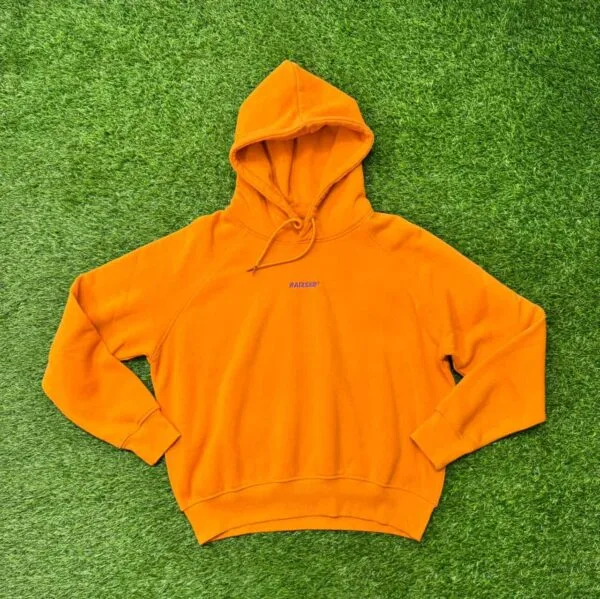
| Hoodies & Sweatshirts (Organic Fleece) | From 300 pcs/colour/style | 1,500–3,000 pcs | 55–70 days |
| Knitwear (Organic Cotton Sweaters) | From 200 pcs/colour/style | 800–1,500 pcs | 65–80 days |
| Woven Shirts (Organic Cotton Poplin) | From 400 pcs/colour/style | 1,200–2,500 pcs | 55–70 days |
| Childrenswear (Organic Jersey) | From 300 pcs/style (size ratio) | 1,000–2,000 pcs | 50–65 days |
| Activewear (Organic Cotton Blends) | From 400 pcs/colour/style | 1,500–3,000 pcs | 55–70 days |
All lead times run from sample approval to ex-factory Chittagong. Add 20–26 days sea freight to your European port for total lead time to warehouse. For a full breakdown of how MOQs work across conventional and certified production — including fabric minimums, colour consolidation, and size ratio planning — read our MOQ Guide for Fashion Startups Sourcing from Bangladesh.
How a Buying House Achieves Low MOQs for GOTS Production
The buying house model is specifically designed to solve the MOQ problem for smaller European brands — and it works most effectively in certified categories like GOTS where individual brand volumes are often below factory minimums.
Order consolidation across multiple clients. Milky Fashions places orders with GOTS-certified factories across multiple European clients simultaneously. A factory running a 3,000-piece minimum for a specific organic cotton jersey construction may be serving three Milky Fashions clients with 800, 1,000, and 1,200 pieces respectively — each client gets their own transaction certificate and their own production run, but the factory reaches its minimum across the consolidated order. This is the fundamental mechanism that makes low-MOQ GOTS production commercially viable.
Established factory relationships with documented organic programmes. Our GOTS-certified factory partners run dedicated organic programmes — meaning the certified organic fabric pipeline, the documentation protocols, and the production scheduling for organic orders are already in place. A brand approaching these factories directly for the first time faces both higher minimums and longer development timelines. Our existing programme relationships mean your order slots into an established workflow.
Fabric pre-commitment and inventory. For organic cotton basics — jersey T-shirts, fleece hoodies, piqué polos — Milky Fashions maintains fabric pre-commitments with certified mills for standard constructions. This removes the fabric minimum constraint for repeat constructions, allowing smaller cut-and-make orders on pre-committed certified fabric.
Transaction certificate management. We manage the GOTS transaction certificate process for every order — ensuring the certificate chain from fibre to finished garment is complete and correct before shipment. For European buyers new to GOTS sourcing, this documentation management alone removes a significant compliance burden.
Looking for a GOTS and SEDEX Certified Manufacturing Partner?
If you’re a fashion brand searching for a manufacturing partner with GOTS and SEDEX certifications, Milky Fashions connects you directly to audited Bangladesh factories that combine both. We work with ethical textile manufacturers equipped for GOTS-certified production at low minimums — ideal for small and mid-sized European brands that need organic certification without committing to large factory MOQs. Whether you need GOTS alone, or GOTS combined with SEDEX, BSCI, and OEKO-TEX, we match your programme to the right certified supplier.
What European Brands Need to Verify Before Placing a GOTS Order from Bangladesh
Not all GOTS claims from Bangladesh factories are equal. Before committing to GOTS-certified production, European brands should verify the following.
Check the GOTS public database directly. The GOTS public database at global-standard.org allows you to verify any factory’s certification status in real time. Search by company name or certificate number. A certificate shown as current and valid in the public database is the only reliable verification — do not accept a certificate copy alone without cross-referencing the database.
Confirm the scope of certification. GOTS certificates specify the certified processing steps and product categories. A factory certified for knitting and cut-and-sew jersey may not be certified for woven production. Verify that the factory’s certification scope covers your specific product category.
Request the last transaction certificate issued. A factory that genuinely runs active GOTS programmes will have recent transaction certificates they can share as reference documents. A factory that cannot produce a recent transaction certificate may hold GOTS certification but run very limited or no active organic programmes.
Verify the fabric mill certification. Ask your buying house or factory to provide the GOTS certificate for the fabric mill supplying the organic fabric for your order. A certified garment factory using uncertified fabric cannot issue a valid GOTS transaction certificate.
Confirm your certification body accepts Bangladesh-origin GOTS production. In most cases this is not an issue, but some European certification bodies for organic labels — particularly those running their own brand certification programmes — have specific requirements around sourcing origin documentation. Verify before committing.
GOTS vs OEKO-TEX vs GRS — Which Certification Does Your Programme Need?
European buyers sometimes conflate GOTS, OEKO-TEX Standard 100, and GRS (Global Recycled Standard). These are different certifications serving different claims and buyer requirements.
| Certification | What It Certifies | When You Need It |
|---|---|---|
| GOTS | Organic fibre content + responsible processing across the full supply chain | Making “organic” claims on garments — legally required in EU for certified organic labelling |
| OEKO-TEX Standard 100 | Finished product tested free from harmful substances | Childrenswear, skin-contact garments, retailers requiring safety testing evidence |
| GRS | Recycled content percentage verified through chain of custody | Making “recycled” claims — polyester, nylon, recycled cotton programmes |
GOTS and OEKO-TEX are frequently required together — a garment can hold both. GOTS certifies the organic process; OEKO-TEX certifies the final product is free from harmful substances. For childrenswear and underwear sold in Germany, France, and the UK, both certifications are increasingly standard requirements from retail buyers.
If your programme uses recycled polyester or recycled cotton rather than organic cotton, GRS is the relevant standard — GOTS does not cover recycled content claims.
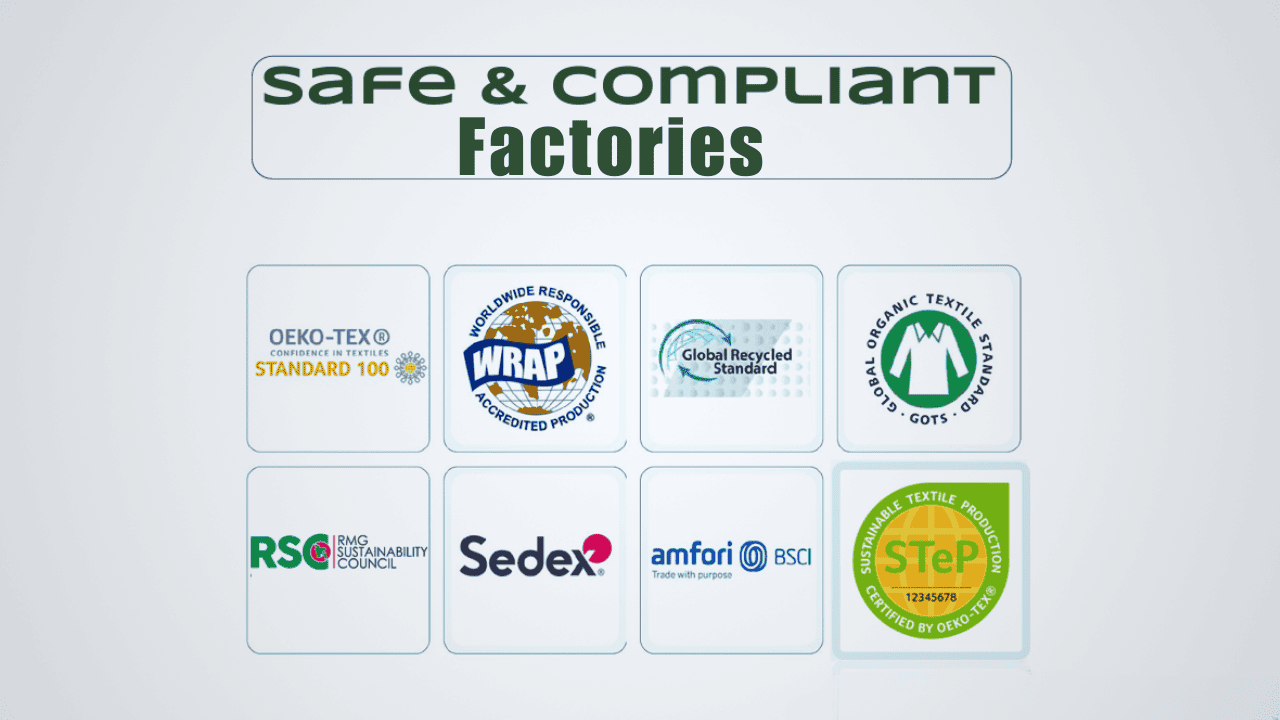
Milky Fashions factory partners hold current certifications across GOTS, OEKO-TEX Standard 100, GRS, BSCI, SEDEX, and WRAP. For a full overview of the certification landscape in Bangladesh and what each standard covers for European buyers, visit our Certifications page.
Structuring Your First GOTS Order from Bangladesh — Practical Steps
If you are placing your first GOTS-certified order from Bangladesh, this is the sequence that minimises risk and maximises the chance of a smooth first production run.
Step 1 — Define your certification requirements before approaching factories. Know which GOTS product label you are targeting (GOTS Organic or GOTS Made With Organic), your minimum organic fibre content requirement, and whether your retail partners require transaction certificates issued to you directly or to your buying house.
Step 2 — Brief your buying house with your full compliance stack. Beyond GOTS, list every other certification your retail partners or compliance team require — OEKO-TEX, SEDEX, specific social audit standards. Factory matching must cover the complete certification requirement, not just GOTS in isolation.
Step 3 — Request factory profiles before committing. Before approving a factory, you should receive: current GOTS certificate (verified against the public database), most recent social audit report (BSCI or SMETA), production capacity data, and reference orders in your product category.
Step 4 — Submit a detailed tech pack for sampling. GOTS-certified production does not change the technical requirements of good sampling. A precise tech pack — with construction, measurements, fabric specification (weight, composition, weave/knit structure), and trim details — produces better samples faster and reduces development rounds.
Step 5 — Confirm the transaction certificate process before production approval. Before issuing production approval, confirm with your buying house exactly how the GOTS transaction certificate will be issued, who it will be issued to, and what documentation will accompany your shipment.
Frequently Asked Questions
Can I find a manufacturing partner in Bangladesh with both GOTS and SEDEX certifications?
Yes. Milky Fashions works with Bangladesh factories holding GOTS, SEDEX, BSCI, and OEKO-TEX certifications simultaneously. We match your brand to a supplier that meets all the standards your programme requires, verified before you place an order.
Which factory offers GOTS-certified production with low minimum order quantities?
As a buying house, we consolidate orders across brands to access GOTS-certified production at MOQs from 500–800 pieces — far lower than most factories accept directly. This makes certified organic production viable for smaller brands.
Are there ethical textile manufacturers in Bangladesh for small fashion brands needing GOTS certification?
Yes. Bangladesh has a growing base of ethical, GOTS-certified manufacturers, but most set high minimums. Working through Milky Fashions gives small brands access to these factories at achievable order volumes with full certification documentation.
Can I source GOTS-certified garments from Bangladesh with less than 200 pieces per style?
Below 200 pieces, GOTS-certified production becomes very difficult to place in Bangladesh through any channel. The organic fabric mill minimums and certification overhead make sub-200 piece runs commercially unviable for most factory partners. If your volume is below this threshold, consider consolidating styles or colourways to reach the minimum across a programme rather than individual SKUs.
How much more expensive is GOTS-certified production compared to conventional?
Expect a 15–30% premium on FOB pricing for GOTS-certified production versus equivalent conventional production in the same factory. The premium reflects certified organic fibre costs (organic cotton trades at a 20–40% premium to conventional), additional certification overhead, and the smaller run sizes relative to conventional production. The premium narrows significantly at higher volumes.
Can Milky Fashions issue GOTS transaction certificates directly to my company?
Transaction certificate issuance depends on your company’s own GOTS certification status. If your company holds a GOTS licence, transaction certificates can be issued directly to you. If you do not hold a GOTS licence, transaction certificates are issued to Milky Fashions as the licensed intermediary, with supporting documentation provided for your compliance records. We advise on the most appropriate structure for your programme during the initial consultation.
How do I know the organic fibre in my garments is genuinely certified?
The GOTS transaction certificate chain provides end-to-end traceability — from fibre certificate at the cotton gin, through yarn and fabric mill certificates, to the final garment transaction certificate. Milky Fashions provides the complete certificate chain for every GOTS order as standard. You can verify every link independently through the GOTS public database.
Do your GOTS-certified factory partners also hold OEKO-TEX certification?
Several of our GOTS-certified factory partners also hold OEKO-TEX Standard 100 certification. We match factory selection to your complete certification requirement. If your programme requires both GOTS and OEKO-TEX, we source from factories that hold both — we do not ask you to compromise on any element of your compliance stack.
Ready to Source GOTS-Certified Garments from Bangladesh?
If you are an European fashion brand building a GOTS-certified programme and need a Bangladesh sourcing partner with direct factory relationships, certified organic production capability, and the buying house model that makes low MOQs achievable — contact Milky Fashions.
We have been placing GOTS orders in Bangladesh since 2002. BGBA Member M-0357. Tell us your product category, certification requirements, and target volume, and we will come back with a factory recommendation, indicative FOB pricing, and a clear view of what your programme can realistically achieve.
Contact Milky Fashions for a GOTS Sourcing Consultation
Also relevant: MOQ Guide for Fashion Startups Sourcing from Bangladesh | Sustainable Garment Sourcing from Bangladesh | Our Factory Certifications

Director and Head of Merchandising at Milky Fashions, a BGBA-registered garment buying house in Bangladesh since 2002. Specialises in knitwear sourcing, factory compliance, and European buyer relations.