MOQ Guide for Fashion Startups Sourcing from Bangladesh: Real Numbers, Smart Strategy
Minimum Order Quantity. Three words that stop more fashion startups in their tracks than anything else in the sourcing process.
You have a product idea. You have a target price. You have a European market waiting. Then you contact a Bangladesh factory and the reply comes back: minimum 3,000 pieces per colour per style. Your budget covers 300.
This is the most common point of failure for small and emerging European fashion brands attempting to source from Bangladesh for the first time. And it is almost entirely avoidable — if you understand how MOQs actually work, why factories set them, how they vary by product category, and how a buying house gives you access to order quantities that would otherwise be out of reach.
This guide gives you the real numbers. No vague ranges, no diplomatic non-answers. At Milky Fashions, we have been placing orders in Bangladesh since 2002 — from large European retailers ordering 50,000 units to fashion startups placing their first 300-piece trial runs. We know what is genuinely achievable, and we will tell you exactly what to expect.
For full MOQ benchmarks by product, see our Bangladesh MOQ guide.
What Is MOQ and Why Do Bangladesh Factories Set It?
MOQ — Minimum Order Quantity — is the smallest order volume a factory will accept for a given product. It is not an arbitrary figure. It is a direct reflection of the factory’s economics.
Every production run involves fixed costs that do not scale with volume: fabric sourcing and cutting, machine setup and calibration, thread and trim procurement, quality control time, documentation, and export handling. If a factory produces 100 pieces of a style, those fixed costs are spread across 100 units. If it produces 3,000 pieces, the same fixed costs are spread across 3,000 units. The per-unit cost difference is substantial.
Bangladesh factories are primarily built for volume. The country’s competitive advantage in global garment manufacturing is rooted in its ability to produce high-quality garments at scale with fast throughput. A large factory with 2,000 sewing operators running at capacity has very little incentive to allocate a production line to a 200-piece order when it could be running 5,000 pieces for a major retailer.
This does not mean small orders are impossible. It means you need to understand the factory landscape, know which factories or buying houses accommodate smaller volumes, and structure your orders intelligently.
MOQ Benchmarks by Product Category — Real Numbers from Bangladesh
These are realistic MOQ ranges based on current Bangladesh market conditions. Factory-direct MOQs are what you would face approaching a factory without a buying house. Buying house MOQs reflect what is achievable when orders are consolidated.
Basic T-Shirts (100% Cotton, Jersey)
Factory-direct MOQ: 1,000–3,000 pieces per colour per style Buying house MOQ: 300–500 pieces per colour per style Notes: T-shirts are Bangladesh’s highest-volume category. Fabric is widely stocked. MOQs are more flexible than most categories because fabric utilisation is efficient and setup times are low.
Polo Shirts (Piqué, Interlock)
Factory-direct MOQ: 1,000–2,000 pieces per colour per style Buying house MOQ: 300–500 pieces per colour per style Notes: Polo shirts require collar and placket components, which add trim MOQs. Buying house consolidation can absorb trim minimums across multiple buyers.
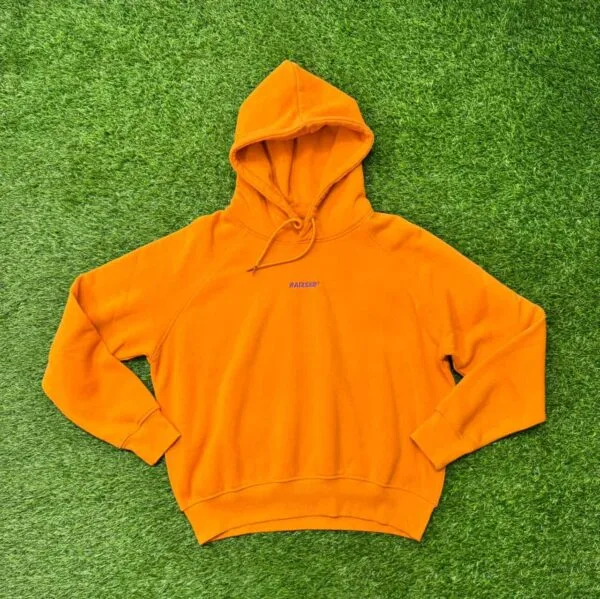
Hoodies and Sweatshirts (Fleece, French Terry)
Factory-direct MOQ: 1,000–2,500 pieces per colour per style Buying house MOQ: 500–800 pieces per colour per style Notes: Fleece fabric has higher fabric MOQs from mills. This pushes buying house minimums slightly higher than basic jersey categories.
Woven Shirts (Cotton Poplin, Oxford, Chambray)
Factory-direct MOQ: 1,200–3,000 pieces per colour per style Buying house MOQ: 400–600 pieces per colour per style Notes: Woven construction requires more complex cutting and sewing operations. MOQs reflect higher setup time.
Denim (Jeans, Jackets, Shorts)
Factory-direct MOQ: 1,500–3,000 pieces per colour per style Buying house MOQ: 500–1,000 pieces per colour per style Notes: Denim fabric comes in fixed roll widths with strict shrinkage requirements. Washing and finishing add process complexity. MOQs are less flexible than jersey categories.
Knitwear (Sweaters, Cardigans, Jumpers)
Factory-direct MOQ: 500–1,200 pieces per colour per style Buying house MOQ: 200–400 pieces per colour per style Notes: Knitwear is produced on flat-bed knitting machines, which are more adaptable to smaller runs than cut-and-sew operations. Bangladesh is one of the world’s leading knitwear exporters and MOQs are often more accessible for this category.
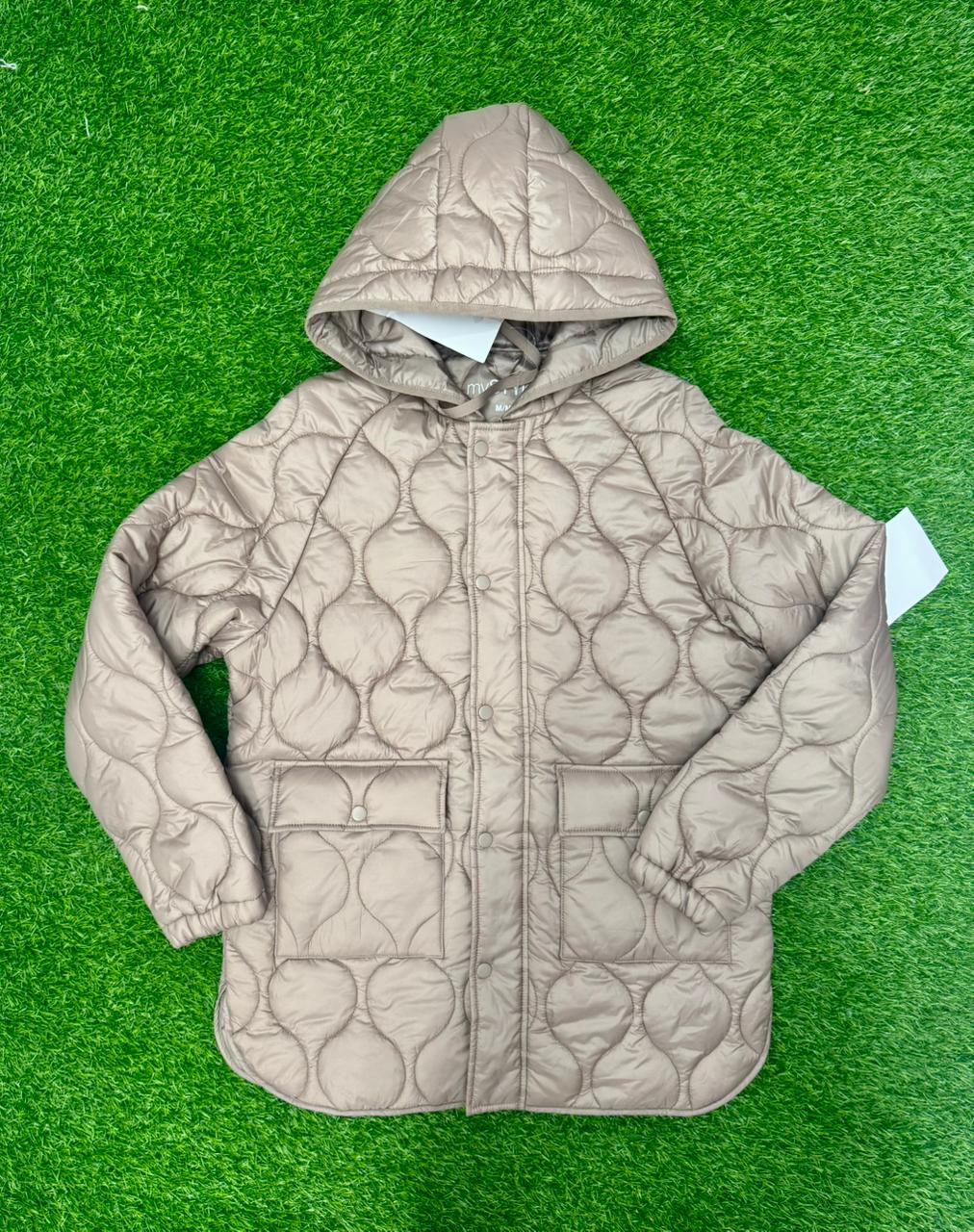
Children’s and Baby Apparel
Factory-direct MOQ: 1,000–2,000 pieces per style (across size range) Buying house MOQ: 300–600 pieces per style (across size range) Notes: Children’s apparel MOQs are typically expressed per style across a size ratio (e.g., 300 pieces split across sizes 2Y/4Y/6Y/8Y), not per size. This makes the total volume more manageable for smaller brands.
Activewear and Sportswear (Polyester, Nylon, Spandex Blends)
Factory-direct MOQ: 1,500–3,000 pieces per colour per style Buying house MOQ: 500–800 pieces per colour per style Notes: Performance fabric MOQs from mills are higher than cotton. Sublimation printing adds a separate minimum. Activewear typically requires more sampling iterations, which increases pre-production cost for small runs.
The Hidden MOQ — Fabric Minimums
Most buyers focus entirely on the garment MOQ and miss the constraint that actually drives it: fabric minimums.
Fabric mills in Bangladesh and Asia set their own minimum order quantities for fabric production. A knitted jersey mill may have a minimum of 500 kg per colour. A woven poplin mill may require 1,000 metres per colour. If your garment order does not use enough fabric to meet the mill’s minimum, the factory either cannot proceed or must order excess fabric that becomes waste — and they will price that waste into your FOB cost.
This is why colour is often a bigger MOQ driver than style. A factory may comfortably produce 300 T-shirts in a single colour if a standard fabric is stocked. But if you want that T-shirt in four custom colours, each colour triggers its own fabric minimum — and your effective fabric order needs to be 4x the single-colour requirement.
Practical implication for startups: Start with fewer colours. A two-colour initial range almost always has lower effective MOQs than a six-colour range. Add colours as your volume grows.
How a Buying House Unlocks Lower MOQs
This is the single most important thing a fashion startup needs to understand about Bangladesh sourcing.
A buying house like Milky Fashions places orders with factories on behalf of multiple buyers simultaneously. When we have three different European brands all ordering basic T-shirts, we can consolidate those orders at the fabric level — one fabric order that meets the mill’s minimum, split across three buyers. Each buyer gets a 300-piece run. The factory gets a commercially viable production volume. The mill gets its minimum. Everyone wins.
This consolidation model is the primary mechanism through which buying houses unlock small-batch access to Bangladesh factories. Without it, you are approaching factories individually and competing against large-volume buyers for production slots — almost always losing.
Beyond consolidation, a buying house brings:
Established factory relationships: We have worked with our factory partners for years. They accept lower-volume orders from us because they trust our pipeline. A new buyer approaching the same factory cold will face higher MOQs and less flexibility.
Pre-negotiated framework pricing: Our volume across multiple buyers gives us negotiating leverage on fabric and trim costs. You benefit from that leverage even at small order sizes.
Quality and compliance assurance: For a startup, placing your first Bangladesh order carries real product risk — incorrect measurements, substandard fabric, delayed shipment. Our quality control process reduces that risk substantially.
Single point of contact: Instead of managing a factory, a fabric mill, a trim supplier, a freight forwarder, and a compliance auditor separately, you manage one relationship. We manage the rest.
MOQ Strategy for Fashion Startups — A Practical Framework
Here is how to approach your first Bangladesh sourcing programme as a small or emerging European brand.
Step 1 — Start With One or Two Hero Products
Do not attempt to launch a full range on your first Bangladesh order. Choose one or two products where Bangladesh has the strongest manufacturing capability and your volume is most concentrated. Basic jersey T-shirts, polo shirts, and knitwear are the most accessible entry points for volume-constrained startups.
Step 2 — Consolidate Colours
As discussed above, colours drive fabric minimums. A 500-piece order in two colours is significantly more achievable than a 500-piece order in five colours. Launch with a tight colour palette, validate the market, then expand colour range in subsequent seasons.
Step 3 — Build a Size Ratio Before You Calculate MOQ
Your MOQ needs to cover a commercially viable size distribution, not just one size. A women’s T-shirt in XS/S/M/L/XL with a standard ratio might look like 5/15/30/30/20 percent. On a 300-piece order, that gives you 15 units in XS and 60 in M. Plan your size ratio before you negotiate MOQ — it changes the conversation significantly.
Step 4 — Request a Sample Order First
Before committing to a production MOQ, request a pre-production sample (PPS) or a small sample run. Most factories will produce 3–5 samples for a fee. Evaluate the construction, measurement accuracy, fabric quality, and finishing. Adjustments at sample stage cost almost nothing. Adjustments after a 500-piece production run cost everything.
Step 5 — Use Your First Order to Build the Relationship
Your first Bangladesh order is not primarily about profit margin. It is about establishing a factory relationship, validating your product, and building the confidence to place larger orders in future seasons. If your first order has slightly higher per-unit costs due to lower volume, that is the cost of market entry — not a failure. The economics improve dramatically as your volume grows.
What Realistic Per-Unit Costs Look Like at Different MOQ Levels
These are illustrative FOB Chittagong price ranges for a standard 180gsm cotton jersey T-shirt with basic construction. Actual pricing depends on specification, fabric, trims, and finish.
| Order Quantity | FOB Price Range (USD) |
|---|---|
| 300 pieces | $3.80 – $4.50 |
| 500 pieces | $3.20 – $3.80 |
| 1,000 pieces | $2.70 – $3.20 |
| 3,000 pieces | $2.20 – $2.70 |
| 10,000 pieces | $1.80 – $2.20 |
The price curve flattens significantly above 3,000 pieces. The biggest cost reduction happens between 300 and 1,000 pieces — which is exactly the volume range where a buying house adds the most value for a growing brand.
Common MOQ Mistakes Fashion Startups Make
Negotiating MOQ without addressing fabric minimums first. The factory will agree to 300 pieces and then come back and tell you the fabric minimum requires you to pay for 800 metres. Get fabric specifications and mill minimums confirmed before you agree on garment MOQ.
Ordering too many styles at low volume. Ten styles at 300 pieces each is a much harder sourcing problem than three styles at 1,000 pieces each. The latter gives you better pricing, simpler logistics, and a clearer quality focus.
Ignoring trim and label MOQs. Woven labels, hang tags, care labels, and branded buttons all have their own minimums from suppliers. A custom woven label may have a minimum of 1,000 units. On a 300-piece order, you are paying for three seasons’ worth of labels upfront.
Skipping the sample stage to save time. This is the single most expensive mistake in fashion sourcing. Sampling exists to catch problems before production. Production problems cost multiples of what sampling costs.
Choosing a factory based on the lowest price alone. At small volumes, factory reliability and quality consistency matter more than a $0.20 per-unit price difference. A factory that produces your 300 pieces correctly and on time is worth far more than one that is 10% cheaper and delivers late with quality issues.
How Milky Fashions Works With Fashion Startups
We work with European fashion brands at every stage of growth — from startups placing their first 300-piece trial order to established brands running seasonal programmes across multiple categories.
For startups and small brands, we offer:
Low minimum entry point: We accept orders from 300 pieces per style for basic jersey categories through our consolidated buying model. Contact us to discuss minimums for your specific product category.
Full-service sourcing: Factory selection, fabric and trim sourcing, sample management, production follow-up, quality inspection, and export documentation — all managed from our Dhaka office.
Compliance-certified factories: Every factory in our network holds current BSCI certification, with selected factories also certified under WRAP, SEDEX, GOTS, OEKO-TEX, and GRS. Your product is compliant from day one.
Transparent pricing: We work on a buying commission model. No hidden markups on fabric or production. You see the factory FOB price and our commission separately.
European market knowledge: We have been working with buyers across the UK, Germany, Italy, France, Netherlands, Spain, and Poland for over two decades. We understand the product standards, compliance requirements, and commercial expectations of each market.
If you are a fashion startup evaluating Bangladesh as your sourcing destination, the first step is a conversation. Tell us your product, your volume, your timeline, and your target landed cost. We will tell you honestly whether Bangladesh is the right fit, what MOQ is realistic, and what the sourcing programme looks like end to end.
Frequently Asked Questions
Q1: What is the absolute minimum order I can place with a Bangladesh factory through a buying house? For basic jersey categories — T-shirts, polos, sweatshirts — a buying house like Milky Fashions can typically accommodate orders from 300 pieces per colour per style through order consolidation. For more complex categories like denim or technical outerwear, realistic minimums through a buying house start from 500–800 pieces.
Q2: Can I mix sizes within an MOQ? Yes — and you should. An MOQ of 300 pieces covers your entire size run for that style and colour. You distribute those 300 pieces across your size ratio (e.g., XS/S/M/L/XL) according to your projected sales split. You do not need 300 pieces per size.
Q3: Do I need to order the same quantity every season? No. Each season is a separate order negotiation. Your volume may grow, shrink, or shift between categories. A buying house adjusts accordingly. However, maintaining a consistent ordering relationship with the same factory does give you better pricing and production priority over time.
Q4: What is the difference between FOB and CMT pricing? FOB (Free On Board) means the factory price includes all production costs plus loading onto the vessel at Chittagong port. You pay for sea freight and import duties from that point. CMT (Cut, Make, Trim) means the factory price covers labour only — you supply the fabric and trims. For most startups, FOB is simpler. CMT makes sense when you have established fabric relationships or specific material requirements.
Q5: How long does a first Bangladesh order take from inquiry to delivery? A realistic timeline for a first order: 2–3 weeks for factory selection and fabric confirmation, 2–3 weeks for sample production and approval, 45–60 days production after sample approval, 21–25 days sea freight to Europe. Total: approximately 3.5–4.5 months from first inquiry to goods in your warehouse. Plan your season accordingly.
Q6: Is Bangladesh suitable for fast fashion or short-lead-time sourcing? Bangladesh is optimised for planned seasonal production, not fast fashion replenishment. Lead times of 3.5–4.5 months are standard. If you need 4–6 week replenishment cycles, you need either a European near-shore supplier or a local stock-holding arrangement. Bangladesh is the right answer for planned seasonal volume, not reactive replenishment.
Milky Fashions is a licensed apparel buying house and garment sourcing company based in Dhaka, Bangladesh, operating since 2002. BGBA Member M-0357. We work with fashion brands, wholesalers, and importers across Europe and global markets. Contact us to discuss your sourcing requirements — no minimum inquiry size.

Director and Head of Merchandising at Milky Fashions, a BGBA-registered garment buying house in Bangladesh since 2002. Specialises in knitwear sourcing, factory compliance, and European buyer relations.