Use this guide to organise decisions before commercial negotiation, then explore the Blog for detailed articles on specific sourcing topics. Bangladesh garment sourcing is easier to manage when product, quality, commercial, and logistics decisions have named owners. A strong supplier conversation does not start with a vague request for a quote. It starts with a product file that another team can read, challenge, and use to prepare a meaningful next step. The same file should show the current approved reference and the open questions, so an early concept does not become an instruction by accident.
Define the program before asking for quotes
Clear inputs beat broad RFQs. Know your product family, target consumer, and whether you are developing new styles or repeating carryovers. Explain what makes the garment distinctive, which features cannot change, and which details can be explored. That distinction helps a sourcing discussion focus on the choices that matter to the brand.
- Category and construction direction
- Reference samples or tech pack maturity
- Market destination and labeling needs
- Internal owners for product, quality, and logistics
- A record of fixed details and open decisions
Choose a partner model intentionally
Direct factory contact and buying-house coordination solve different problems. Score the model against communication ownership and product fit, not slogans. Ask how sample comments are consolidated, how changes are recorded, who receives progress updates, and what evidence is available before shipment handoff.
- Who owns sampling comments and escalation?
- How many product families does the partner truly handle well?
- What documentation package does your company require?
- How will buyer-side decisions be recorded and shared?
Treat sampling as a decision system
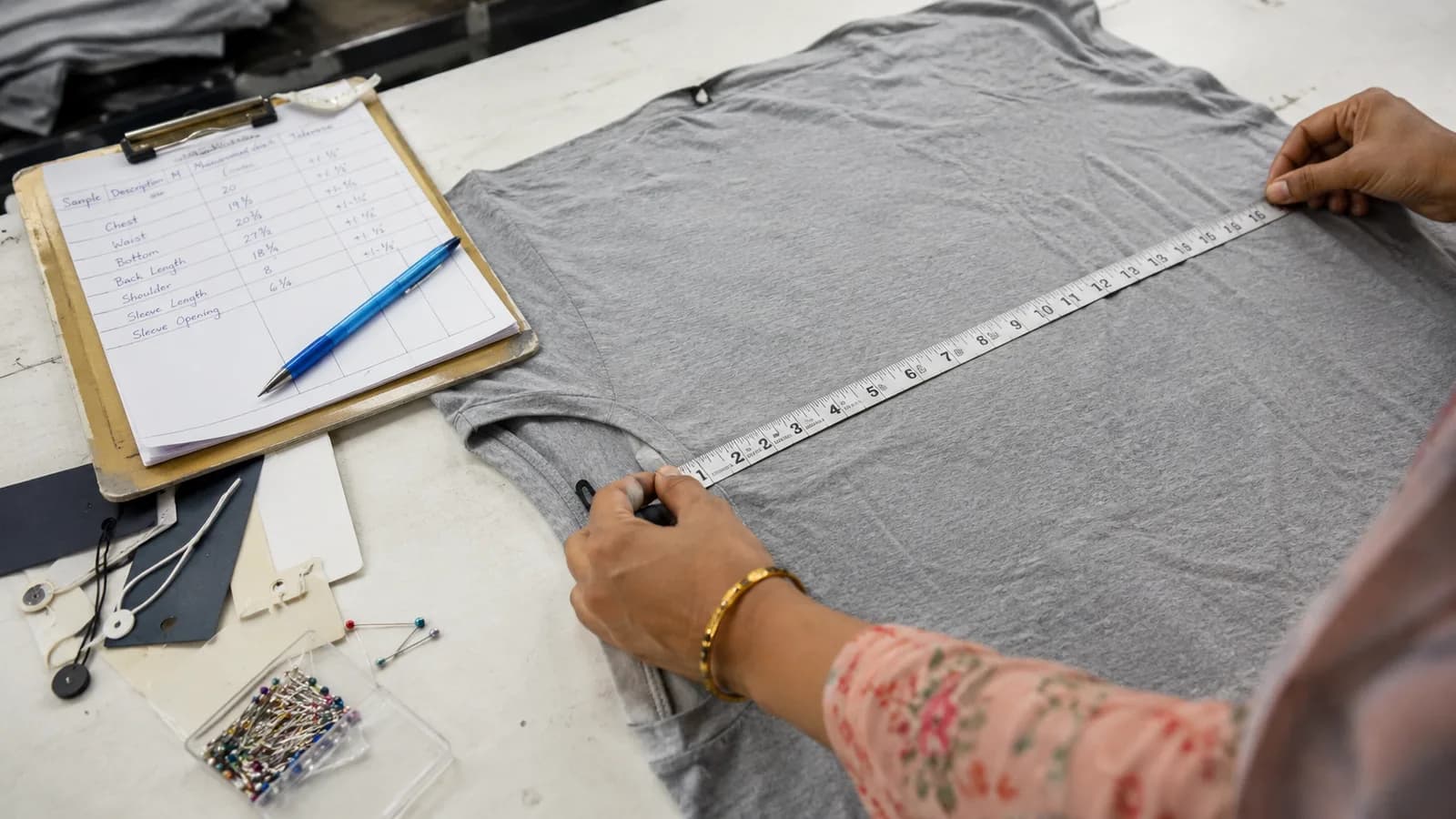
Colour, size, fit, and pre-production samples are decision gates. Written approvals protect bulk more than late inspection language alone. Each comment should state the style, size, location, requested change, and whether the buyer needs to review a revised sample. Keep approved references with the active technical file.
Build the commercial package as a set
Unit price, Incoterms, payment method, and document expectations belong together. Comparing different commercial structures without clearly labelling them can create a misleading comparison. Involve the buyer's finance and logistics colleagues early, and make sure the product scope behind any discussion is the same for every participant.
Keep compliance questions precise
Send requirement lists that your internal product, quality, and legal teams actually use. Separate material information, social-program questions, product claims, and market-entry questions so each can be answered by the appropriate person. Buyers should confirm the final requirements for their own sales market with their advisers.
Maintain one active style file
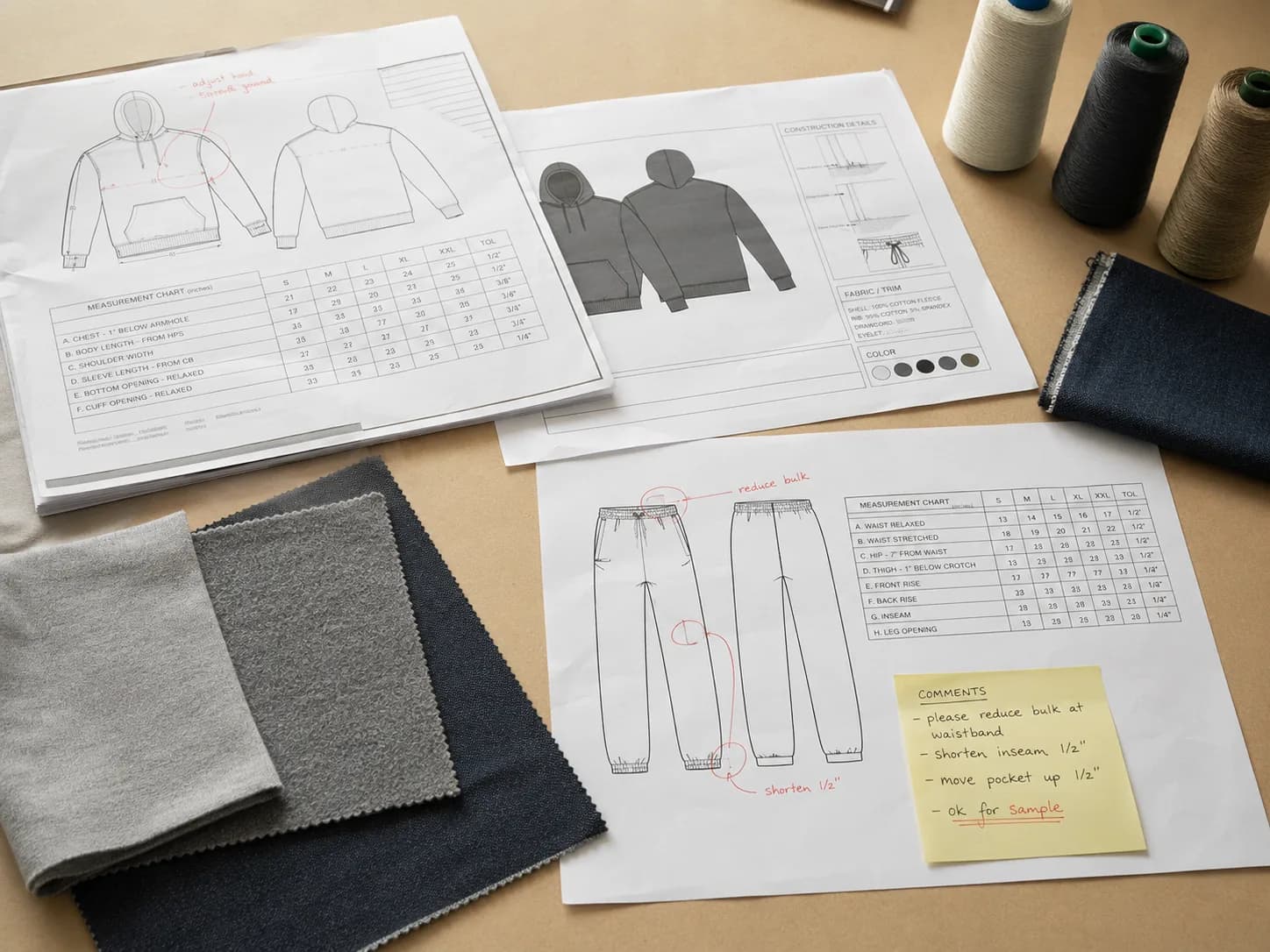
A style file should show the latest approved position, not merely collect every historical message. Keep the active sketch, reference garment, measurements, material direction, artwork, labels, packing notes, sample comments, and open questions together. Give the file a clear version and name the buyer-side owner. This helps a sourcing discussion stay anchored in the current product rather than in an earlier idea.
- State which details are fixed and which are open for development.
- Record every buyer decision that replaces an earlier instruction.
- Make the approved reference available to quality and logistics colleagues.
- Use one format for questions that need a buyer response.
Prepare each handoff
Before a product moves from concept to sample review, from sample review to bulk preparation, or from bulk preparation to shipment, pause to review what the next person needs. Confirm the current reference, the decision history, outstanding questions, and the contact responsible for the next approval. This does not make a programme slower. It reduces the risk that a decision becomes unclear when responsibility moves between teams.
- Product teams need the current specification and buyer comments.
- Quality teams need the approved reference and measurement points.
- Logistics teams need the agreed shipment and document contacts.
Ask questions that can be answered
A useful sourcing question identifies the active style, the information needed, and the buyer decision it will support. Questions such as whether a garment can match a reference, whether a packing instruction is complete, or whether a sample comment requires another review can be tracked and answered. Broad requests for an assurance without a product context are harder to turn into productive action.
- Connect each question to the current product record.
- Name the buyer-side owner who will review the answer.
- State whether the answer changes a sample, approval, or handoff.
Review the programme as a system
A sourcing programme is more than a sequence of supplier messages. Product development, quality review, commercial choices, and shipment preparation affect one another. Use a short buyer-side review at each major handoff to confirm that the active style file still reflects the latest decision. Where a detail is still open, assign an owner and a route for resolution. This keeps the programme clear without turning every update into a lengthy meeting.
- Check that the active reference matches the current style file.
- Confirm which team owns the next product decision.
- Keep quality and logistics questions separate but connected to the style.
- Retire superseded notes so they are not reused by mistake.
Key takeaways
- Program clarity before price comparison.
- Partner fit is product-specific.
- Approvals need written owners and dates.
- Commercial terms must match logistics reality.
- A written approval record protects handoffs across teams.
- Blog articles go deeper on Incoterms, LCs, scorecards, PP checklists, and CBAM orientation.
FAQ
- How is Insights different from Blog?
- Insights is the structured knowledge hub and topic map. Blog publishes long-form educational articles. This guide sits under Insights and links to supporting Blog posts, so a buyer can start with the overall decision framework and then study a focused subject.
- Where can I find supporting articles?
- The Blog covers supporting topics such as Incoterms, supplier scorecards, pre-production approvals, CBAM orientation, and letters of credit. Read those alongside your own product, quality, finance, and logistics guidance rather than treating a general article as programme-specific instruction.
- What makes an opening sourcing brief useful?
- It identifies the garment category, intended customer, reference material, technical maturity, target market, internal decision owners, and the details that are fixed versus still open for development.