
Apparel Sourcing from Bangladesh for Polish Fashion Brands
Milky Fashions helps Polish fashion brands and retailers source clothing from Bangladesh — knitwear, t-shirts, hoodies, denim and private-label apparel. As an independent BGBA buying house, it manages sampling, production and quality control while ensuring factories meet the BSCI, WRAP and SEDEX standards Polish buyers expect.
Ta strona po polsku: Producent Odzieży w Bangladeszu dla Polskich Marek
Poland is one of Central Europe’s most exciting fashion markets. Over the past decade, Polish fashion brands have moved from serving domestic consumers to competing across the wider EU — on Zalando, through pan-European wholesale channels, and increasingly through their own direct-to-consumer e-commerce platforms. As Polish brands scale, the question of where to source shifts from convenience to strategy. Near-shore production in Romania or Turkey works at small volumes. But as order quantities grow and margin pressure increases, Bangladesh becomes the logical next step.
Bangladesh is the world’s second-largest garment exporter, combining world-class manufacturing scale, competitive FOB pricing, and a compliance infrastructure built precisely for European market requirements. For Polish fashion brands looking to grow their sourcing capability while maintaining the compliance credentials required by EU retailers and regulations, Bangladesh — managed through a professional licensed buying house — is one of the strongest sourcing decisions they can make.
Milky Fashions is a licensed apparel buying house based in Dhaka, Bangladesh, established in 2002. BGBA Member M-0357. We work with fashion brands, wholesalers, and importers across Poland and Central Europe. This page covers everything a Polish buyer needs to know about sourcing garments from Bangladesh — why Bangladesh makes commercial and compliance sense for Polish brands, what certifications your supply chain requires, realistic MOQs and lead times, logistics from Chittagong to Polish warehouses, and how our full-service buying house model works end to end.
Why Polish Fashion Brands Source from Bangladesh
Significant price advantage over near-shore European production: Polish fashion brands sourcing from Romanian, Turkish, or Bulgarian factories face substantially higher FOB prices than Bangladesh equivalents. For volume basics — T-shirts, polo shirts, hoodies, sweatshirts, and woven shirts — Bangladesh consistently delivers 30–50% price advantages. On a €500,000 annual sourcing programme, that differential translates into €150,000–€250,000 in cost savings that can be reinvested in growth, used to sharpen retail pricing, or retained as margin.
Quality levels that meet EU retail and e-commerce standards: Polish brands distributing through Zalando, About You, or pan-European wholesale channels face rigorous product quality requirements. Bangladesh’s leading export factories are calibrated for exactly these standards — producing for global European and American fashion brands with the same quality management systems, machinery, and skilled workforce. Factory selection is the critical variable, and that is precisely what a professional buying house manages on your behalf.
Compliance depth for EU market distribution: Polish brands selling across the EU need supply chain compliance documentation that meets EU retailer requirements and forthcoming EU sustainability legislation. Bangladesh’s compliance ecosystem — BSCI, SEDEX, GOTS, OEKO-TEX, GRS — provides the independently audited, documented evidence base that EU-facing Polish brands need. Sourcing through a BSCI-certified buying house gives Polish brands the compliance infrastructure of major Western European brands without the overhead of building it internally.
Growing Polish e-commerce opportunity: Poland’s online fashion market is the fastest-growing in Central Europe. Polish brands scaling through e-commerce channels need the cost structure that Bangladesh provides to compete on price against Western European brands with deeper sourcing relationships. Bangladesh enables Polish e-commerce brands to price competitively while maintaining the quality and compliance credentials European online consumers increasingly expect.
Chittagong to Polish warehouses via Hamburg or Rotterdam: Sea freight from Chittagong to Hamburg or Rotterdam takes 21–25 days, with onward road freight to Warsaw or other Polish logistics hubs adding 2–4 days. The total transit time from Chittagong to a Polish warehouse is typically 24–29 days. Gdańsk, Poland’s Baltic Sea gateway, is also increasingly viable as direct Baltic shipping services develop. Total lead time from order confirmation to goods in Poland is typically 3.5 to 4.5 months.
LDC graduation planning for Polish buyers: Bangladesh is scheduled to graduate from LDC status in November 2026, eventually affecting EU import duty rates. Polish buyers importing from Bangladesh should understand and plan for this transition now. Read our Bangladesh LDC Graduation 2026 guide for a full breakdown of what changes, when, and how to protect your sourcing strategy.
Bangladesh vs Other Sourcing Origins for Polish Buyers
Polish brands typically evaluate Bangladesh against Turkey, Romania, China, and Bangladesh. Here is a direct comparison across the criteria most relevant to Polish buyers.
| Criteria | Bangladesh | Turkey | Romania | China |
|---|---|---|---|---|
| FOB price (basic T-shirt) | $2.20–$4.50 | $4.50–$7.00 | $5.00–$8.00 | $2.80–$5.00 |
| Lead time to Warsaw | 26–30 days total | 12–16 days | 5–8 days | 28–35 days |
| BSCI certification depth | Very high | High | Medium | Medium |
| GOTS/organic capability | Strong | Moderate | Limited | Limited |
| MOQ flexibility (via buying house) | From 300 pcs | From 500 pcs | From 200 pcs | From 1,000 pcs |
| EU import duty (current) | 0% (EBA) | 0% (Customs Union) | 0% (EU member) | 12% (standard GSP) |
Bangladesh is the strongest option for Polish brands prioritising cost competitiveness and compliance depth at volume. Romania and Turkey offer shorter lead times for near-shore replenishment. The optimal model for growing Polish brands is Bangladesh for planned seasonal volume and a near-shore origin for in-season top-up orders.
Compliance Requirements for Polish and EU Market Distribution
Polish fashion brands selling across the EU face compliance requirements that flow from EU legislation, major retailer mandates, and increasingly from platform marketplace standards. Your Bangladesh supply chain must meet the following.
BSCI (Business Social Compliance Initiative): The primary social compliance standard across European retail. Polish brands distributing through German, Dutch, or pan-European retail channels need current BSCI certification from their supply chain partners. The BSCI audit covers eleven performance areas including labour rights, safe working conditions, freedom of association, prohibition of child and forced labour, and environmental management. All Milky Fashions factory partners hold current BSCI certification with grades verified before every order.
SEDEX / SMETA 4-Pillar: Required by major EU retailers and e-commerce platforms. For Polish brands distributing through Zalando or other pan-European channels, SMETA 4-Pillar is increasingly the expected compliance standard. Milky Fashions provides SEDEX-registered factory access with shared platform documentation so Polish buyers can review audit reports directly.
EU CSDDD (Corporate Sustainability Due Diligence Directive): The EU CSDDD, now coming into force, requires companies above applicable thresholds to identify and address human rights and environmental risks across their supply chains. Polish companies approaching these thresholds — and those aspiring to supply to larger EU retailers already subject to the directive — need documented supply chain due diligence. Our compliance management infrastructure provides the foundation this legislation requires.
OEKO-TEX Standard 100: Required for childrenswear, underwear, and skin-contact garments sold across the EU. For Polish brands selling children’s apparel or basics, OEKO-TEX certification is essential. Selected Milky Fashions factory partners hold current OEKO-TEX certification across jersey and knitwear categories.
GOTS (Global Organic Textile Standard): For Polish brands developing organic cotton lines — a growing segment in the Polish mid-market and premium e-commerce space — GOTS is the required certification standard for organic product claims. Milky Fashions works with GOTS-certified factory partners for organic jersey, knitwear, and woven programmes.
GRS (Global Recycled Standard): For Polish brands making recycled fibre claims — particularly in activewear and outerwear — GRS provides the chain-of-custody documentation required to substantiate those claims to EU consumers and retailers. Selected Milky Fashions factory partners hold current GRS certification.
Product Categories We Source for Polish Buyers
| Category | MOQ (via Milky Fashions) | Production Lead Time |
|---|---|---|
| Basic T-Shirts (100% Cotton Jersey) | From 300 pcs/colour/style | 45–60 days |
| Polo Shirts (Piqué, Interlock) | From 300 pcs/colour/style | 45–60 days |
| Hoodies & Sweatshirts (Fleece, French Terry) | From 500 pcs/colour/style | 50–65 days |
| Woven Shirts & Blouses | From 400 pcs/colour/style | 50–65 days |
| Denim (Jeans, Jackets, Shorts) | From 500 pcs/colour/style | 60–75 days |
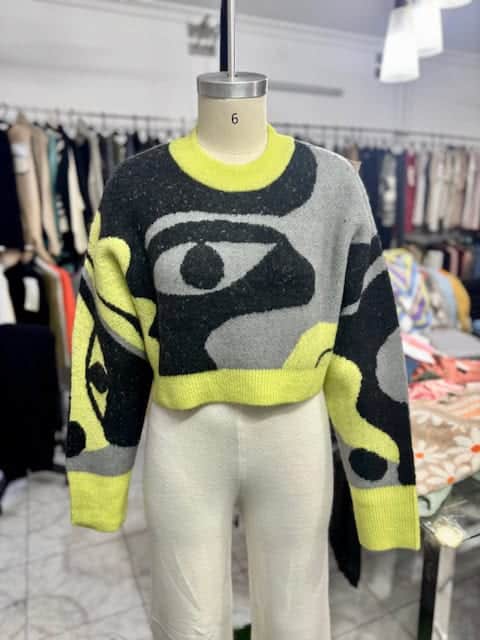
| Knitwear (Sweaters, Cardigans, Jumpers) | From 200 pcs/colour/style | 60–75 days |
| Children’s & Baby Apparel | From 300 pcs/style (across size ratio) | 45–60 days |
| Activewear (Polyester, Nylon, Spandex blends) | From 500 pcs/colour/style | 50–65 days |
All production lead times run from sample approval to ex-factory Chittagong. Add 24–29 days for sea freight plus road freight to Polish warehouse for total lead time. For a detailed breakdown of how MOQs work — including fabric minimums, colour consolidation strategy, and how buying house order pooling enables smaller runs — read our MOQ Guide for Fashion Startups Sourcing from Bangladesh.
Logistics: Chittagong to Poland — Full Route Overview
Poland is served by two primary routing options from Bangladesh — via North Sea ports (Hamburg or Rotterdam) or via the Baltic Sea (Gdańsk). The Hamburg and Rotterdam routes are the most established and offer the best service frequency.
| Route | Sea Transit | Road to Warsaw | Total to Polish Warehouse |
|---|---|---|---|
| Chittagong → Hamburg → Warsaw (road) | 21–25 days | 2–3 days | 23–28 days |
| Chittagong → Rotterdam → Warsaw (road) | 21–25 days | 3–4 days | 24–29 days |
| Chittagong → Gdańsk (Baltic direct) | 25–30 days | 1–2 days | 26–32 days |
| Chittagong → Hamburg (LCL groupage) | 24–28 days | 2–3 days | 26–31 days |
Shipping lines: Maersk, CMA CGM, MSC, and Hapag-Lloyd all operate regular Chittagong–Hamburg and Chittagong–Rotterdam services. The Gdańsk route is growing in capacity as Baltic shipping develops.
Polish customs clearance: Bangladesh-origin garments currently enter Poland at 0% import duty under the EU’s EBA initiative. Customs clearance typically takes place at Hamburg, Rotterdam, or Gdańsk, with goods moving under EU transit to the Polish destination. Milky Fashions provides all required Bangladesh-end export documentation — commercial invoice, packing list, EUR.1 certificate of origin, and applicable compliance certificates.
The Complete Sourcing Process: How Milky Fashions Works With Polish Brands
Step 1 — Sourcing consultation: We begin with a structured briefing covering your product categories, target FOB pricing, compliance requirements, volume, and seasonal timeline. We advise honestly on what Bangladesh can and cannot deliver for your specific brief and growth stage.
Step 2 — Factory selection: We match your product specification and compliance requirements to the most suitable certified factory in our network. You receive factory profiles, current BSCI audit certificates, production capacity data, and reference order details before committing to any factory relationship.
Step 3 — Costing and negotiation: We obtain competitive FOB costings from factory partners on your behalf. Our aggregate buying volume across multiple European clients gives us price negotiating leverage that a Polish brand approaching Bangladesh factories independently cannot match.
Step 4 — Sample development: Full pre-production sample management — initial development, fit review, measurement checking against your tech pack, construction approval, and colour matching. Production does not commence until your samples are approved to specification.
Step 5 — Production management: Inline inspections during the production run with regular progress updates to your team. Any quality or specification deviation is escalated immediately and resolved before goods are completed.
Step 6 — Final inspection and shipment authorisation: Final random inspection against AQL 2.5 standards before shipment is authorised. Inspection report issued to your team in advance. Goods are held if the final inspection fails AQL threshold.
Step 7 — Export documentation for EU customs: Full export documentation package — commercial invoice, packing list, EUR.1 certificate of origin, BSCI certificate, OEKO-TEX, GOTS, or GRS certificates where applicable. All documents formatted for EU customs clearance at Hamburg, Rotterdam, or Gdańsk.
Why Polish Brands Choose Milky Fashions
Licensed, registered, and independently verifiable: BGBA Member M-0357. Trade Licence, Export Registration Certificate, and incorporation documents available on request. Verifiable directly with the Bangladesh Garment Buying Agents Association.
Compliance stack built for EU distribution: BSCI across all factory partners. SEDEX, GOTS, OEKO-TEX, WRAP, and GRS available for buyers with specific certification requirements. Full audit documentation provided for every order — the compliance evidence Polish brands need to supply EU retailers and meet EU legislation.
Growth-stage friendly: We work with Polish brands at every stage — from startups placing their first 300-piece trial order to established brands running multi-category seasonal programmes. Our consolidated buying model means you do not need to reach factory-direct volume minimums to access Bangladesh manufacturing.
Western EU market knowledge: Polish brands distributing across Germany, Netherlands, and other Western EU markets benefit from our understanding of those markets’ compliance and quality requirements. We ensure your Bangladesh supply chain meets the standards of your most demanding EU retailer, not just your domestic market.
Transparent pricing: Declared buying commission on FOB value. Factory price and commission shown separately. No hidden margins on fabric, trims, or production costs.
For a comprehensive independent vetting framework — exactly what to ask any Bangladesh buying house before placing your first order — read our 27-Point Buying House Vetting Checklist.
Frequently Asked Questions for Polish Buyers
Q1: Does Bangladesh have preferential trade access to Poland under EU agreements? Yes. Bangladesh currently benefits from the EU’s Everything But Arms (EBA) initiative — 0% import duty on garments entering Poland. Following LDC graduation in November 2026, a transitional period applies before standard GSP rates take effect. Polish buyers with significant Bangladesh volume should plan for this transition now. Read our Bangladesh LDC Graduation 2026 guide.
Q2: How does Bangladesh compare to Turkish or Romanian sourcing for Polish brands? Bangladesh offers 30–50% lower FOB prices than Turkish or Romanian production for comparable product categories. The trade-off is longer lead times — 3.5 to 4.5 months versus 6–10 weeks for near-shore. The optimal model for most Polish brands is Bangladesh for planned seasonal volume and a near-shore origin for in-season replenishment. This split gives you Bangladesh’s cost advantage on the bulk of your production while maintaining replenishment flexibility.
Q3: Is Bangladesh quality suitable for Polish brands selling on Zalando or pan-European platforms? Yes. Bangladesh’s leading factories produce for major European fashion brands selling on Zalando, About You, and equivalent platforms. The quality management systems, AQL inspection standards, and finishing capabilities are aligned with European platform requirements. Factory selection for platform-selling clients focuses specifically on facilities with the consistency and documentation standards these channels require.
Q4: Can you source GOTS-certified organic garments for the Polish market? Yes. We work with GOTS-certified factory partners for organic cotton jersey, knitwear, and woven programmes. GOTS-certified production has slightly higher MOQs due to organic fabric mill requirements. Contact us to discuss your organic programme specifications.
Q5: What is the minimum order for a Polish fashion startup? Through our consolidated buying model, we accommodate orders from 300 pieces per colour per style for basic jersey categories. For more complex categories such as denim or technical outerwear, minimums via our model start from 500 pieces. See our full MOQ Guide for Fashion Startups.
Q6: How do I verify Milky Fashions is a legitimate licensed buying house? Verify our BGBA membership number M-0357 directly with the Bangladesh Garment Buying Agents Association. We provide Trade Licence, Export Registration Certificate, and company incorporation documents on request. We welcome factory visits for buyers placing their first order. Read our 27-Point Buying House Vetting Checklist for the full due diligence framework.
Q7: Can Milky Fashions support Polish brands sourcing for export to Western European markets? Yes. We work with Polish brands sourcing from Bangladesh for distribution across Germany, the Netherlands, France, and other Western EU markets. Our compliance documentation — BSCI, SEDEX, OEKO-TEX — covers the requirements of Western European retailers, giving Polish brands the supply chain credentials to compete in those markets on equal terms with established Western European fashion businesses.
Ready to discuss your Poland sourcing requirements? Contact Milky Fashions through our website. BGBA Member M-0357. Licensed buying house operating since 2002.
Also sourcing for other European markets? See our dedicated guides for UK brands, German brands, Italian brands, Dutch brands, French brands, and Spanish brands.